


Why Spring Is the Right Time to Check Your Plumbing and Septic System

A spring plumbing and septic inspection checklist is the best way to catch hidden damage before it turns into a costly emergency. Central Illinois winters are hard on home systems — freezing temps cause pipes to expand and contract, and spring snowmelt puts extra pressure on septic drainfields and sewer lines. By the time the ground thaws, small cracks and weak joints are ready to fail.
Here's a quick spring plumbing and septic checklist to get started:
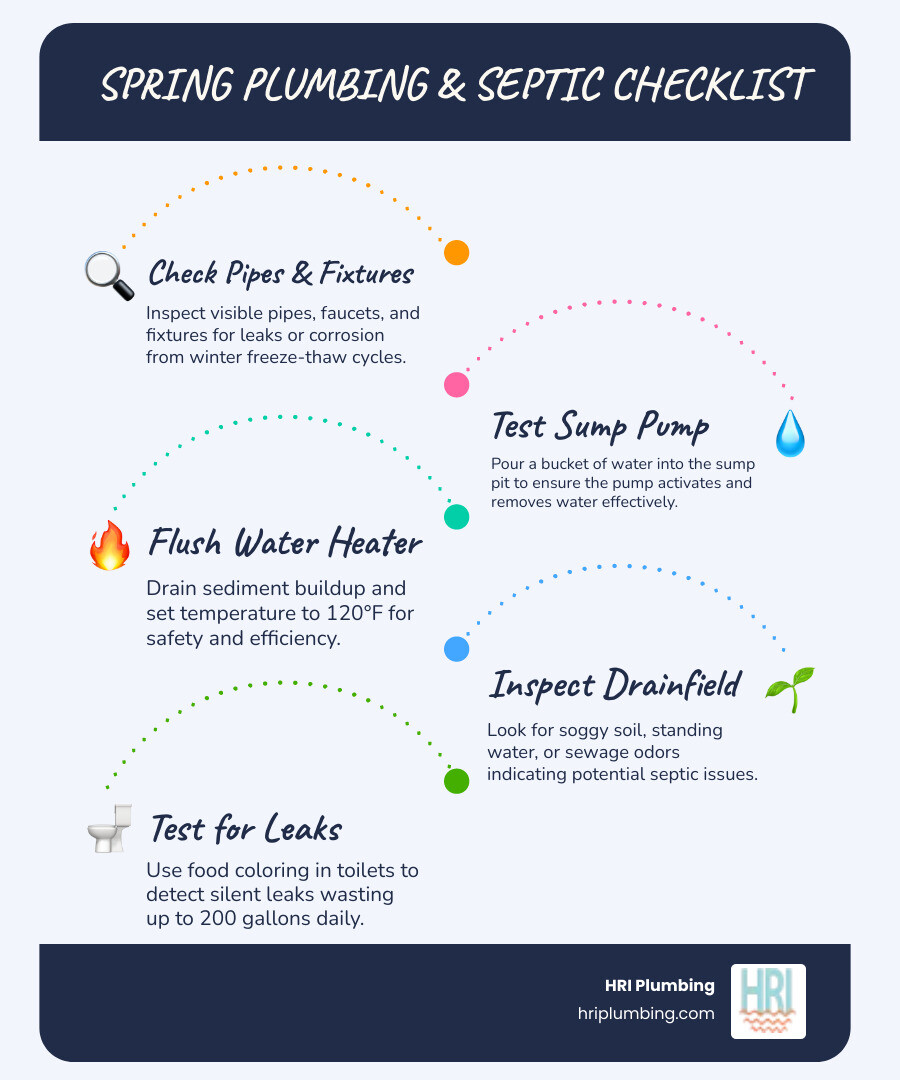
- Check visible pipes, faucets, and fixtures for leaks or corrosion
- Test your sump pump using a bucket of water
- Flush sediment from your water heater and confirm the temperature is set to 120°F
- Inspect outdoor hose bibs and irrigation connections for freeze damage
- Walk your drainfield and look for soggy soil, standing water, or sewage odors
- Check septic tank access lids for frost heave damage or cracks
- Confirm your septic tank has been pumped within the last 3 to 5 years
- Clean the effluent filter if your system has one
- Test all toilets for silent leaks using the food coloring method
- Test water pressure at an outdoor faucet (ideal range: 40 to 80 PSI)
The average American household uses around 300 gallons of water per day, according to the EPA. A single running toilet can add 200 gallons more. That kind of strain adds up fast — especially after a tough winter. A little preventative attention each spring can save you from the kind of water damage that costs homeowners thousands of dollars to fix.
Essential Spring Plumbing and Septic Inspection Checklist
Spring in Illinois isn't just about planting marigolds; it’s about making sure your home's infrastructure survived the deep freeze. When the ground thaws in Springfield or Jacksonville, it shifts. This movement can stress underground pipes and septic components.
One of the first things we recommend is a "whole-house leak hunt." Start at your water meter. Ensure all faucets and water-using appliances are turned off, then watch the meter. If the low-flow indicator is moving, you have a "ghost leak" somewhere in your system. These hidden leaks can waste thousands of gallons and drive up your utility bills.
Another simple but effective DIY trick is the food coloring test for toilets. Drop a few drops of blue or red food coloring into the tank (not the bowl). Wait about 30 minutes without flushing. If color appears in the bowl, your flapper valve is leaking. This silent culprit can waste 200 gallons of water a day, which is particularly taxing if you rely on Septic Services to handle your waste.
Indoor Plumbing and Sump Pump Readiness
As the snow melts and the spring rains begin in Rushville and surrounding areas, your sump pump becomes the most important appliance in your home. You don't want to find out it's broken when you have three inches of water in your basement.
To perform a "bucket test," slowly pour a five-gallon bucket of water into the sump pit. The float should rise, the pump should kick on, and the water should discharge quickly. If the pump makes a grinding noise or fails to activate, it’s time for professional help. Also, check the discharge line outside to ensure it’s directing water at least 5 to 10 feet away from your foundation.
Next, give your water heater some attention. Winter forces your water heater to work overtime to warm up frigid incoming water. This leads to sediment buildup at the bottom of the tank, which acts as an insulator, making the unit less efficient and shortening its lifespan. We suggest draining and flushing a few gallons from the tank to remove this "scale." While you're there, check the temperature setting. Keeping it at 120°F is the "sweet spot" for energy efficiency and preventing accidental scalds. Taking these steps helps you Avoid Potential Disasters With A Preemptive Plumbing Inspection before they escalate.
Outdoor Fixtures and Spring Plumbing and Septic Inspection Checklist Tasks
Outdoor plumbing often bears the brunt of Illinois winters. Even if you disconnected your hoses last fall, water trapped inside a hose bib can freeze and crack the pipe inside the wall.
When you turn on your outdoor faucets for the first time this spring, don't just look at the spout. Look for water leaking from behind the handle or dripping inside your basement or crawlspace. If the water flow seems unusually weak, it could indicate a pipe that has partially burst further back in the line.
Don't forget your gutters and downspouts. If they are clogged with winter debris, water will pool around your foundation. This puts immense hydraulic pressure on your basement walls and can even saturate the soil around your septic tank, leading to system backups. Taking the time to Get A Springtime Plumbing Inspection For Peace Of Mind ensures your irrigation and drainage systems are ready for the growing season.
Critical Septic System Components to Evaluate
If you live in a rural area like Sherman or Chatham, your septic system is your most vital utility. Unlike a city sewer, a septic system is a living biological environment that needs careful monitoring.
A professional inspection should include a check of the sludge and scum levels. If the sludge layer is within 2 inches of the outlet tee, it’s time for a pump-out. We also look at the baffles—the "guards" that keep solids in the tank and out of your drainfield. If a baffle is corroded or missing, solids can clog your soil, leading to a failure that costs thousands to fix.
If your system was installed after 2000, it likely has an effluent filter. This should be cleaned every 6 to 12 months. A clogged filter will cause slow drains throughout the house, often mistaken for a pipe clog. For residents needing a Septic Inspection Sherman Il or a Septic Inspection Chatham Il, spring is the ideal time to ensure these mechanical parts survived the frost.
Monitoring the Drainfield and Groundwater Impact
The drainfield is the most expensive part of your septic system. In the spring, high groundwater levels and heavy snowmelt can "drown" the drainfield, preventing it from absorbing effluent.
Walk your yard and look for these red flags:
- Soggy Soil: If one area of your yard is mushy while the rest is dry, your drainfield may be struggling.
- Lush Green Grass: Exceptionally bright, tall grass over the drainfield (even during a dry spell) suggests the system is failing to filter waste properly.
- Sewage Odors: If you smell "rotten eggs" near the tank or drainfield, gases are escaping, which usually indicates a backup or a saturated field.
If you notice these Signs It Could Be Time To Replace Your Septic System, you need an expert evaluation. Residents in Rochester should stay particularly vigilant during the rainy months and consider a Septic Inspection Rochester Il to check for high groundwater elevation.
Professional Maintenance and Long-Term System Health
While many tasks on a spring plumbing and septic inspection checklist are DIY-friendly, some things require a pro. A professional septic service involves more than just "pumping and dumping." It includes a thorough check of the distribution box to ensure effluent is being shared equally across the drainfield lines.
Long-term health is also about your daily habits. Your septic system is not a trash can. To keep your system running smoothly year-round, avoid flushing the following:
- "Flushable" wipes (they don't actually break down)
- Feminine hygiene products
- Paper towels and tissues
- Grease, fats, and oils
- Household chemicals or paint thinners
Water conservation is another key to septic longevity. Spacing out your laundry loads—doing one or two a day rather than six on Saturday—prevents "hydraulic overload," where the tank is filled faster than the drainfield can process the liquid.
When to Call for Professional Repairs
At HRI Plumbing, we’ve seen it all—from frozen pipes that burst in April to septic tanks that were "forgotten" for a decade. We provide 24/7 support to the communities of Jacksonville, Springfield, and Rushville because we know plumbing emergencies don't wait for business hours.
If you find standing water in your basement, a gurgling sound in your drains, or a septic alarm that won't stop buzzing, give us a call. We specialize in Septic Tank Repair Springfield Il and Septic Tank Repair Jacksonville Il, offering honest, high-quality solutions that fit your budget.
Final Steps for Your Spring Plumbing and Septic Inspection Checklist
Consistency is the secret to a trouble-free home. By following a spring plumbing and septic inspection checklist every year, you extend the life of your appliances and protect your property value. Keeping a folder with your maintenance records—including when the tank was last pumped and the results of your water pressure tests—is invaluable if you ever decide to sell your home.
Don't wait for the "big leak" to happen. Understanding The Importance Of Having Your Plumbing System Inspected Regularly is the first step toward peace of mind. Whether you need Septic Tank Plumbing Rushville Il or a simple water heater flush, our team is here to help. For More info about septic services, reach out to us today and let's get your home ready for a beautiful Illinois spring!


