


Why Knowing the Signs Your Septic Tank Needs Pumping Can Save You Thousands

The signs your septic tank needs pumping are something every homeowner with a septic system needs to know — and know well. About one in five U.S. households relies on a septic system to treat wastewater. That means millions of people are quietly depending on an underground system that most never think about — until something goes very wrong.
Here's a quick look at the most common warning signs:
- Sewage backing up into sinks, tubs, or toilets
- Slow drains across multiple fixtures in your home
- Gurgling sounds coming from your pipes or toilets
- Foul or rotten egg odors inside the house or in your yard
- Pooling water or soggy ground near your drainfield
- Unusually lush, green grass over the septic area
- High nitrate levels in your well water
When a septic tank fills up with too much solid waste — called sludge — and floating greasy material called scum, it can no longer separate and treat wastewater the way it's designed to. The natural anaerobic bacteria inside the tank need enough liquid space to do their job. Once sludge and scum take up too much of that space, solids start escaping into your drainfield, and that's when serious — and expensive — problems begin.
The good news? Catching these signs early makes a real difference. Most septic systems last 20 to 30 years or more with proper care. Routine pumping every three to five years is usually all it takes to keep things running smoothly.
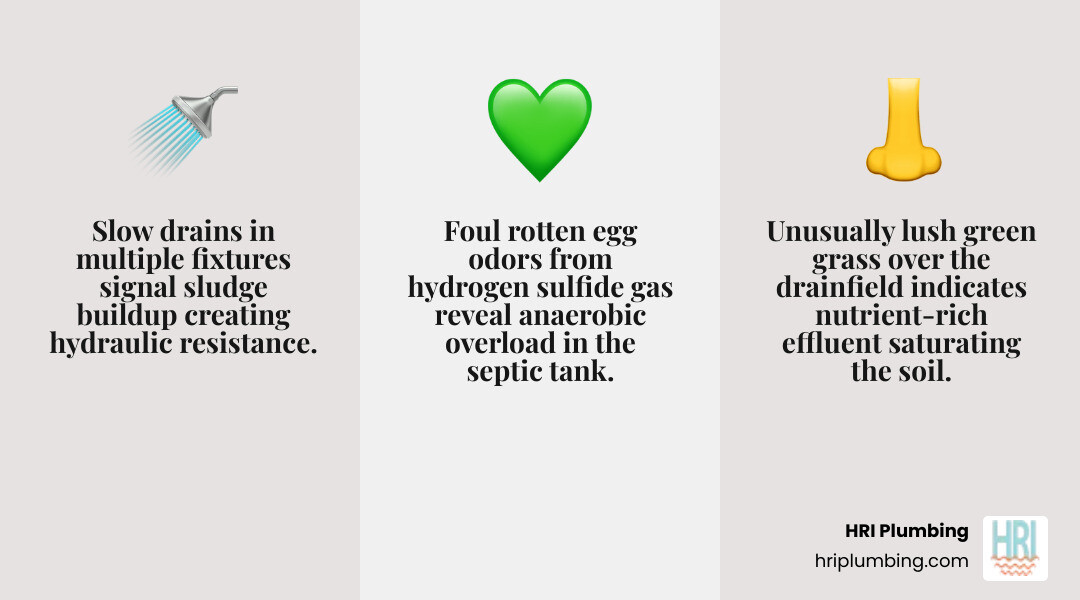
7 Critical Signs Your Septic Tank Needs Pumping
A septic system is a mini-wastewater treatment plant in your backyard. When discussing signs your septic tank needs pumping, we look for evidence that the system is hydraulically overloaded or the sludge layer is too thick.
Ignoring warning signs risks your property and health. Neglect can lead to raw sewage surfacing in your yard or backing up into your home, creating a biohazard. Failing systems also contaminate groundwater. Financially, regular maintenance is far cheaper than a full system replacement, which can cost tens of thousands of dollars.
Here are the seven most critical signs:
- Sewage Backups: This is the most serious sign. Foul-smelling liquid surfacing in floor drains or tubs indicates the tank is beyond capacity.
- Persistent Foul Odors: Septic gases like methane smell like rotten eggs. If you smell this around your tank or home, waste isn't being processed correctly.
- Slow Drains Throughout the House: If every sink, tub, and toilet is slow, the issue is the tank, not a single pipe clog.
- Pooling Water: Muddy patches or standing water over the drainfield (without rain) mean the soil is saturated.
- Gurgling Pipes: A "glug-glug" sound after flushing or running appliances indicates air trapped by rising waste levels.
- Lush, Green Grass: An unnaturally green patch over your drainfield suggests the system is "fertilizing" the lawn with overflowing effluent.
- Contaminated Well Water: In areas like Jacksonville or Rushville, high nitrate levels in well water can signal a leaking septic system.
If you notice these issues, seek professional Septic Tank Plumbing Springfield Il immediately.
Slow Drains and Signs Your Septic Tank Needs Pumping
One of the earliest signs your septic tank needs pumping is slow drainage. You might notice toilets requiring multiple flushes or water lingering in the shower. This occurs as sludge accumulation reduces the space for new wastewater, creating hydraulic resistance.
Another sign is the appearance of "sewer gnats" or drain flies. These tiny insects breed in the organic matter of an overfull tank. If you see them around drains, they may be traveling up from the septic system.
If drains are sluggish across the board, call for Septic Tank Repair Jacksonville Il before a total backup occurs.
Lush Grass and Other Outdoor Signs Your Septic Tank Needs Pumping
An unnaturally lush patch over your drainfield is a red flag. While the system is designed to release treated effluent into the soil, a full tank can clog drainfield pipes with solids. This forces effluent upward, fertilizing the grass but making the ground spongy or "bouncy."
This is an environmental risk, as untreated waste sits on the surface. For residents ensuring their system is functioning correctly, Septic Tank Installation Sherman Il can provide oversight to prevent these failures.
Differentiating Between a Full Tank and a Simple Clog
Use the "One Fixture Rule": if only one sink is slow, it's a clog. If multiple drains gurgle or fail, it's a system-wide issue. You can also check your outside sewer cleanout; standing wastewater there indicates a main line blockage or a full tank. A Septic Inspection Chatham Il can determine if scum levels are too high or if a mechanical blockage is the cause.
What to Do Immediately When You Spot Trouble
If sewage backs up or you smell rotten eggs:
- Stop Water Usage: Every gallon adds pressure. Stop laundry and showers immediately.
- Avoid DIY Chemicals: Enzymes or harsh chemicals won't fix a physically full tank and can disrupt beneficial bacteria.
- Stay Safe: Septic gases are hazardous. Never lean into or enter a tank.
- Call the Pros: A vacuum truck is needed to remove waste and inspect components.
For emergencies, Septic Tank Repair Rushville Il is the safest way to handle a system under stress.
Maintaining Your System to Prevent Overflows
Prevention is the best medicine for your septic system. We often tell our customers that a septic tank is like a car—you can pay for oil changes now, or a new engine later. The same applies here.
The general "3-5 year rule" for pumping is a solid guideline, but it isn't a one-size-fits-all solution. How often you need service depends on three main factors:
- Household Size: More people mean more water and more solids entering the tank.
- Tank Capacity: A 1,000-gallon tank will fill faster than a 1,500-gallon tank.
- Usage Habits: Using a garbage disposal or doing all your laundry on a single day can shorten the time between pumpings.
Pumping Frequency Guidelines
To give you a better idea of when to schedule your next service, refer to the table below. These estimates are based on average water usage (about 70 gallons per person, per day).
| Tank Size (Gallons) | 1 Person | 2 People | 4 People | 6 People |
|---|---|---|---|---|
| 750 | 9 years | 4 years | 2 years | 1 year |
| 1,000 | 12 years | 6 years | 3 years | 2 years |
| 1,250 | 15 years | 7 years | 4 years | 2 years |
| 1,500 | 19 years | 9 years | 5 years | 3 years |
Note: If you use a garbage disposal, the EPA suggests pumping your tank every 1-2 years regardless of household size, as food scraps do not break down as easily as human waste.
Best Practices for Long-Term Septic Health
At HRI Plumbing, we help neighbors in Jacksonville, Springfield, and Rushville maintain their homes. Beyond regular pumping, daily habits significantly impact your system's lifespan.
Water Efficiency is KeyExcessive water prevents solids from settling, pushing them into the drainfield.
- Space Out Laundry: Spread loads throughout the week rather than doing all at once.
- Fix Leaks: A leaky toilet can add 200 gallons of water daily.
- High-Efficiency Fixtures: Use low-flow toilets and ENERGY STAR appliances.
Watch What You FlushYour septic tank is not a trash can. Avoid flushing:
- "Flushable" Wipes: These do not break down and cause clogs.
- Grease and Oils: These create a thick scum layer that blocks pipes.
- Chemicals: Paint thinners and excessive bleach kill the bacteria that digest waste.
- Non-biodegradables: Feminine products and cigarettes quickly fill the tank.
Landscaping and External Care
- Divert Runoff: Point gutters away from the drainfield to prevent soil saturation.
- Root Control: Avoid planting trees near the tank, as roots can crack pipes.
- No Parking: Never drive vehicles over the tank or drainfield to avoid compacting soil or crushing pipes.
By following these habits and watching for signs your septic tank needs pumping, you can ensure your system lasts for decades. If you need a maintenance plan, our team offers comprehensive Septic Services.
Whether in Springfield, Jacksonville, or Rushville, we provide reliable solutions with 24/7 support. Be proactive to keep your home’s silent partner healthy!


